Good water makes everyday life a little easier. Your morning coffee tastes better, your shower feels more comfortable, and cleaning the kitchen doesn’t turn into a battle against stubborn white marks. When water quality isn’t quite right, though, the small annoyances can add up. Glassware may look cloudy after washing, soap might not rinse away easily, or the water from the kitchen tap may have a taste you simply don’t enjoy.
The challenge is figuring out what needs to change. There are plenty of filters, softeners, and treatment systems available, and each seems to promise cleaner, better water. But the most expensive option isn’t automatically the best one. A sensible choice begins with understanding your water supply, identifying your priorities, and selecting equipment that can deliver the results you actually need.
Start With Your Household’s Water Needs
Before comparing products, take a moment to consider how water is used throughout your home. Drinking and cooking may be your main concerns, or perhaps hard water is leaving deposits on showerheads, taps, and appliances. Some households experience several issues at once.
The water source matters, too. Municipal supplies are generally treated and monitored according to applicable regulations, but water can still pick up substances from plumbing as it travels to the tap. Private wells have different considerations because their quality can vary with groundwater conditions, nearby land use, and seasonal changes.
Testing is a practical way to move beyond guesswork. Depending on your concerns, an assessment may measure hardness, pH, iron, sediment, or other relevant parameters. If a health-related contaminant is suspected, use an appropriate laboratory test rather than relying on a basic home demonstration.
Once you understand what’s present, it’s easier to narrow the options. You won’t need to pay for equipment that addresses problems your household doesn’t have.
Treating Water Throughout the House
Some water quality concerns affect nearly every tap, shower, and appliance. In those situations, a system installed where water enters the property may be worth considering.
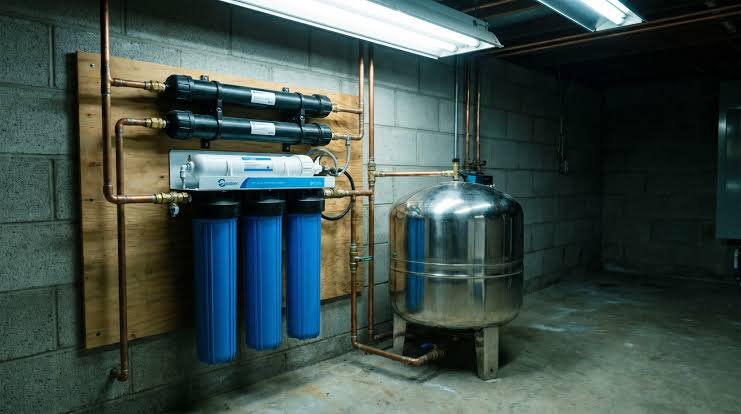
Well-selected whole-home systems can treat incoming water before it travels through the household plumbing. Depending on the equipment, this may involve sediment filtration, activated carbon, water softening, or another treatment technology designed for a specific concern.
The main benefit is coverage. Rather than treating water at just one faucet, the system can address selected water issues at multiple outlets. This may be useful when sediment, certain tastes and odors, or hardness affects the entire property.
Still, whole-house treatment isn’t a universal solution. Different technologies remove or reduce different substances, and some contaminants require specialized equipment. A basic sediment filter, for example, won’t necessarily remove dissolved chemicals or microorganisms. Likewise, a carbon filter shouldn’t be assumed to address every health-related risk.
Capacity is another important consideration. A system must handle the household’s typical and peak water demand without causing an unacceptable drop in pressure. A family with several bathrooms may need different equipment from a small apartment, even if both properties have similar water quality.
Ask the installer to explain what the proposed system treats, what it doesn’t treat, and how its performance will be checked after installation.
Better-Tasting Water for Drinking and Cooking
For many people, the kitchen tap is where water quality matters most. Water is used for drinking, making tea, preparing meals, filling bottles, and washing fresh produce. If the taste or odor is unpleasant, even water that’s otherwise suitable for consumption can become less appealing.
Under-sink filtration offers a convenient way to treat water at a specific outlet. Depending on the filter media, these systems can improve certain taste and odor issues or reduce particular contaminants. The important thing is matching the filter to the concern rather than assuming every product offers the same protection.
RO drinking water systems use a semipermeable membrane to reduce many dissolved substances, with results depending on the specific unit, its condition, and the water entering it. They can be useful where testing indicates that reverse osmosis is appropriate, but they aren’t necessary for every household.
Before purchasing one, check the manufacturer’s performance claims and independent certifications, where available. Look for documentation that identifies the specific substances reduced rather than broad statements about purity. Also consider the system’s water use, storage tank capacity, filter replacement costs, and available space beneath the sink.
Maintenance deserves attention from the start. A reverse osmosis unit with overdue filter changes or a poorly maintained membrane may not perform as intended. Following the manufacturer’s schedule helps keep the system working reliably.
Managing Hard Water Around the Home
Hard water is a common source of frustration. It contains elevated concentrations of calcium and magnesium, which can leave mineral deposits on taps, shower screens, kettles, and heating elements. Some people also notice that soap lathers less easily or that laundry feels different after washing.
Water softeners are designed to reduce hardness, typically through an ion-exchange process that replaces calcium and magnesium ions with sodium or, in some systems, potassium ions. This can help limit scale formation and make routine cleaning easier.
A softener doesn’t serve the same purpose as a drinking-water filter. It generally isn’t designed to remove bacteria, pesticides, or every dissolved contaminant. If your main concern is hardness, a softener may be appropriate; if you’re worried about a specific contaminant, additional treatment may be needed.
Households should also consider sodium levels and personal requirements before choosing a softener. People who need to restrict sodium intake may wish to discuss their options with a healthcare professional and a water treatment specialist. In some installations, a separate drinking-water tap or alternative treatment arrangement may be appropriate.
Salt use, regeneration settings, and wastewater requirements should also be part of the buying decision. A correctly sized and maintained softener can provide consistent results without wasting resources unnecessarily.
Compare the Full Cost, Not Just the Price Tag
It’s tempting to choose a system based on its initial price, particularly when several products appear to do similar jobs. But the purchase cost tells only part of the story.
Consider the price of replacement cartridges, treatment media, salt, electricity, and professional servicing. Ask how often consumables need changing and whether replacement parts are readily available. If the equipment uses water during regeneration or filtration, find out how that affects ongoing consumption.
Installation conditions can influence cost as well. Older plumbing, limited space, drainage requirements, or electrical connections may complicate the process. Getting these details clarified before installation helps avoid unwelcome surprises.
A reputable provider should explain the expected maintenance schedule and provide clear information about the system’s capabilities. Be wary of pressure to buy immediately or claims that one device can solve every possible water quality issue.
Keep Your Water Treatment System Working Well
Even a carefully selected system needs occasional attention. Filters become loaded with particles, membranes gradually require maintenance, and softeners depend on correct settings and adequate supplies. Ignoring these tasks can affect performance over time.
Keep a record of installation dates, filter changes, service visits, and water test results. Follow the manufacturer’s instructions, and arrange further testing when water quality changes or when a specific contaminant needs ongoing monitoring.
For private wells, regular testing is particularly important because groundwater conditions can change. For municipal supplies, testing may be useful when there are concerns about the plumbing within the property or a known local issue.
A Better Choice Begins With Better Information
Choosing water treatment equipment doesn’t need to be complicated. Start by identifying what bothers you about your water, confirm the issue through suitable testing, and compare systems designed to address that specific concern.
Some households may benefit from treating water throughout the property, while others need only a drinking-water filter or a solution for hardness. The right choice depends on the test results, household needs, budget, and willingness to maintain the equipment.
Take your time, ask practical questions, and look beyond the marketing claims. When your water treatment system is chosen for the right reasons and cared for properly, it can become a dependable part of your home rather than another piece of equipment you have to worry about.